
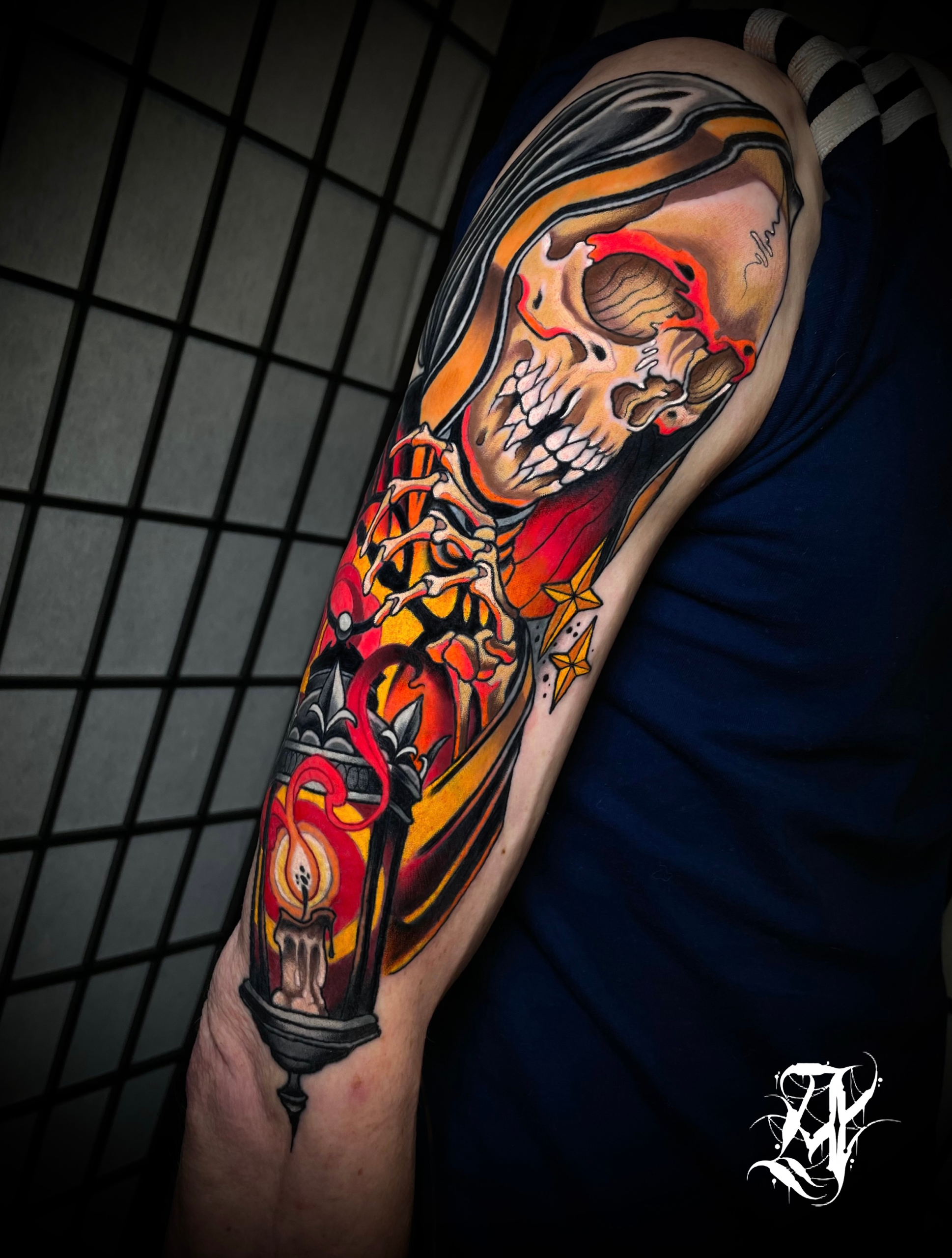
Tattoo art has always borrowed from history, but Art Nouveau and Neoclassical art serve as permanent artistic influences which remain vital to the tattoo art form. The two movements developed in different centuries, yet their artistic elements still influence present-day tattoo designs, particularly in neo-traditional tattoos. Contemporary tattoo artists use Art Nouveau’s flowing designs together with Neoclassical’s structured elements to develop body art which maintains a balance between ancient and present-day styles.
The Neotraditional style has experienced growth because of this artistic combination. The two methods take inspiration from traditional artistic styles, yet they utilise modern skin art techniques to express their designs.
The Historical Foundations
Art Nouveau originated during the 1890s because artists wanted to break free from established academic painting techniques. The art movement established new beauty standards which drew inspiration from natural elements and showcased flowing, organic movements. The visual style of the movement is represented through Alphonse Mucha’s artistic work.
Neoclassical art developed earlier, drawing inspiration from ancient Greek and Roman sculpture and architecture. The style showed its central principles through symmetrical designs, which created balanced visual effects and showed human body movements. The artists Jacques-Louis David and other painters established the movement’s visual style, which combined powerful elements with controlled artistic expression.
Neo-traditional tattooing merges two distinct artistic styles to create a decorative art form which exhibits a large-scale artistic presence.
Neo-Traditional Tattooing as the Bridge
Neo-traditional tattooing exists as a hybrid style that combines classic American traditional tattooing with contemporary illustrative tattooing. The system maintains its bold outlines, which provide strong visual clarity while permitting artists to create detailed works with their individual artistic styles. The design functions as a suitable bridge between the decorative elements of Art Nouveau and the architectural components of Neoclassical design.
The Art Nouveau style appears in modern artworks through its representation of flowing hair, ornamental frames, and botanical surrounding elements. The facial and body features of the characters possess sculptural depth while displaying Neoclassical-style dramatic lighting techniques.
The Role of Neotraditional Tattoo in Classical Revival
The contemporary Neotraditional Tattoo movement has created a strong enhancement of traditional design elements. It depends on a combination of colours and high-contrast elements, and focused negative space design instead of using bright colour schemes. Classical themes receive their natural support through this particular method.
Neotraditional renders Neoclassical subjects like marble busts and mythological figures in a way that intensifies their visual impact. The stone sculpture’s monochrome palette comes from its design, which uses strong outlines to preserve clarity throughout time.
The Art Nouveau style uses flowing linework, which transforms into Neotraditional because this design method prefers distinct and strong lines.
Why the Back Is Ideal for Neo-Traditional Work
The Back Tattoo Neotraditional format has become popular because people want to experience its artistic potential. The back area of the body provides artists with the most extensive body area that delivers symmetrical results to test their expertise in traditional artistic methods. Artists who use the back as their main design area can achieve controlled visual movement throughout their artworks, which resembles classical painting techniques.
Art Nouveau’s Lasting Influence on Tattoo Flow
One reason Art Nouveau continues to thrive in tattoo culture is its natural compatibility with the human body. Tattoos must move with skin and muscle, and Art Nouveau’s signature curves accomplish this requirement through their design. The modern neo-traditional aesthetic incorporates this effect through hair extensions that follow shoulder contours and circular halo designs that rest above the upper back and botanical designs which naturally encircle the entire body.
The style of the design enables large tattoos to maintain their elegant appearance, together with their dynamic quality, which keeps them from becoming static. The body of work achieves its best results when these elements combine to create an impression that the tattoo permanently becomes part of the body.
Neoclassical Depth and Drama on Skin
The movement of Art Nouveau exists together with the Neoclassical style, which brings both actual weight and authentic artistic representation. Modern tattoo artists use classical sculpture techniques to develop depth through their shading and structural designs.
This artistic effect appears most clearly through the blackwork and neo-traditional portrait styles. The facial features include prominent cheekbones and well-defined nasal structures, combined with shadows that artists create to resemble marble sculptures. The tattoo achieves a sculptural appearance which exists through its use of ink.
The intense lighting found in Neoclassical artwork enables tattoos to sustain their visual power throughout different periods. The skin’s natural ageing process creates high contrast between light and shadow, which allows the design to remain visible throughout time.
Planning a Classical-Inspired Tattoo
The process of selecting a classical tattoo design requires careful consideration of all aspects when choosing a large back tattoo design. The designs depend on their composition and flow, which makes it necessary to select an artist who understands neo-traditional design elements. The majority of tattoo collectors dedicate extensive time to perfecting reference materials because they need to make a decision about their upcoming big tattoo.
FAQs
What is the Neotraditional Tattoo style?
The Neotraditional tattoo style blends bold outlines and bright colours with more detail and depth than traditional tattoos. It draws on influences like Art Nouveau for a more expressive, modern look.
Why is the back a popular place for neo-traditional tattoos?
The back is a good place for neo-traditional tattoos because it offers a good balance and a large canvas on which the tattoo artist can create symmetrical compositions. This makes the Back Tattoo Neotraditional a good choice for tattoos that include Art Nouveau elements and the structure of Neoclassical art.
How do Art Nouveau and Neoclassical art affect modern tattoos?
Art Nouveau brings flowing lines, ornate frames, and botanical beauty, while Neoclassical art brings realistic anatomy, heavy shading, and well-balanced composition. Neo-traditional tattooing combines both styles to create tattoos that are timeless and modern.
Conclusion
Tattoo trends experience continuous change, but traditional artwork keeps returning because it provides a permanent artistic system which has endured throughout history. The increasing popularity of Neotraditional Tattoos, together with the rising need for Neotraditional Back Tattoo designs, demonstrates that traditional artistic styles continue to be relevant. Contemporary artists use historical design elements to create fresh visual styles which appeal to modern art collectors.
Artists who desire tattoos with artistic value and permanent appeal should consider the combination of Art Nouveau and Neoclassical design as their best option.
For More Insight, Click Below:
Best Neotraditional Tattoos That Define Modern Tattoo Excellence

